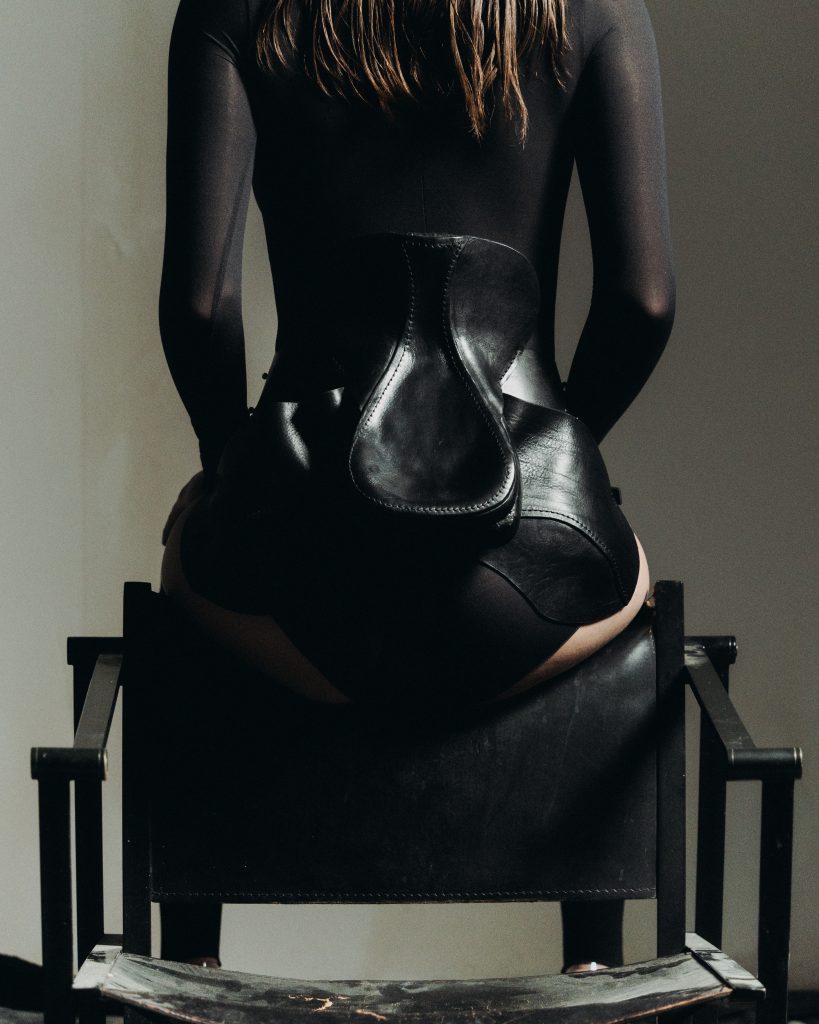
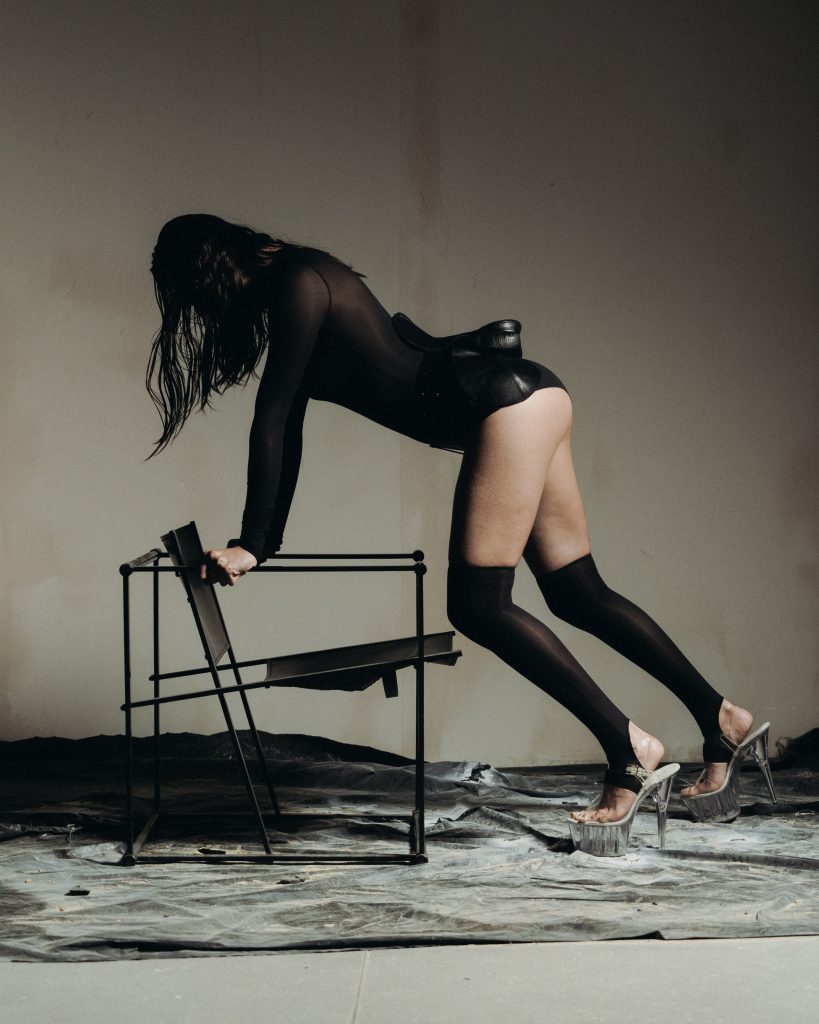
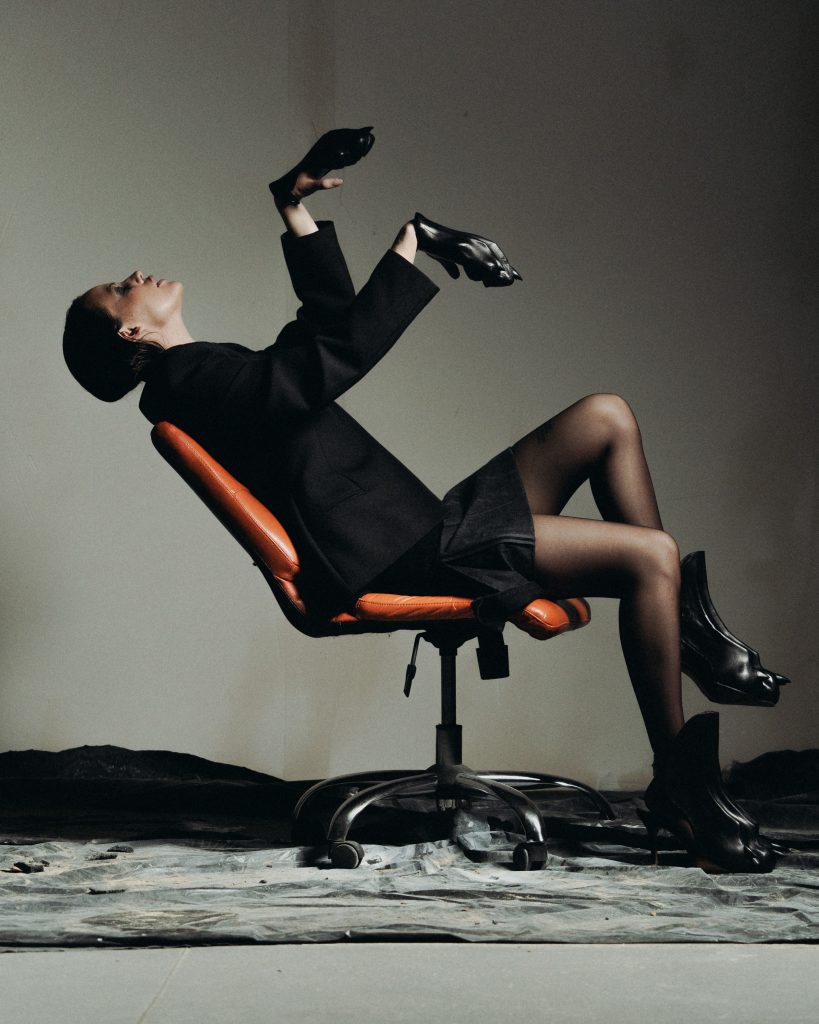
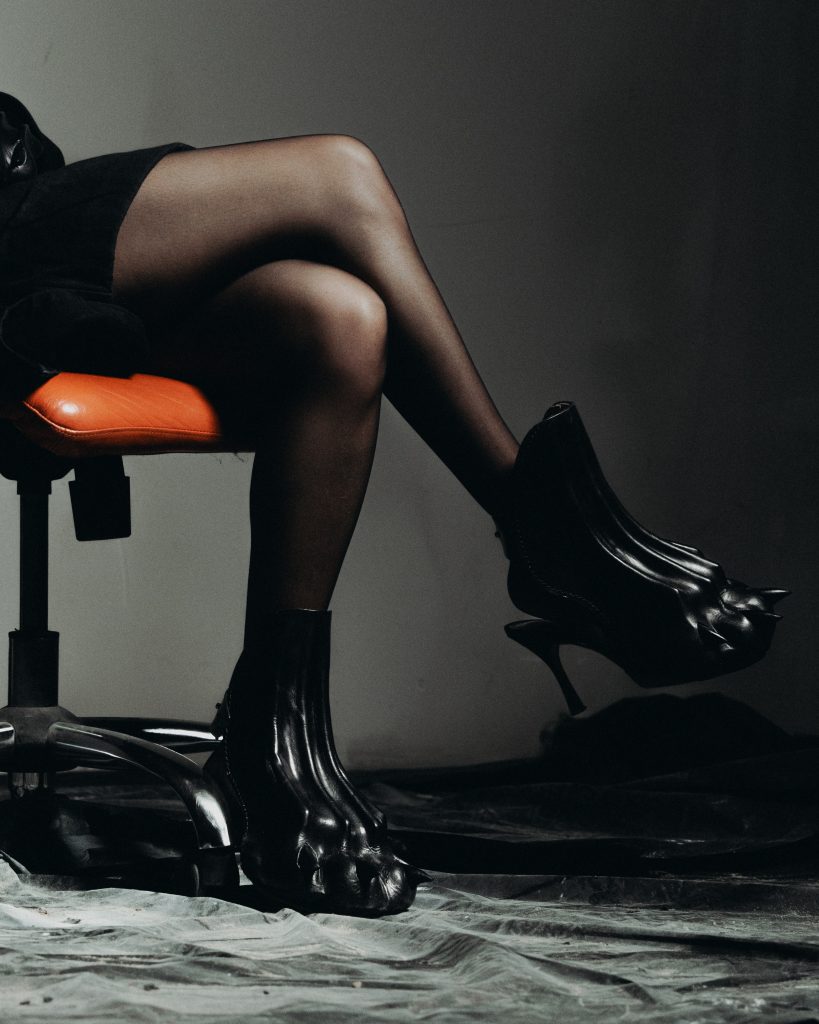
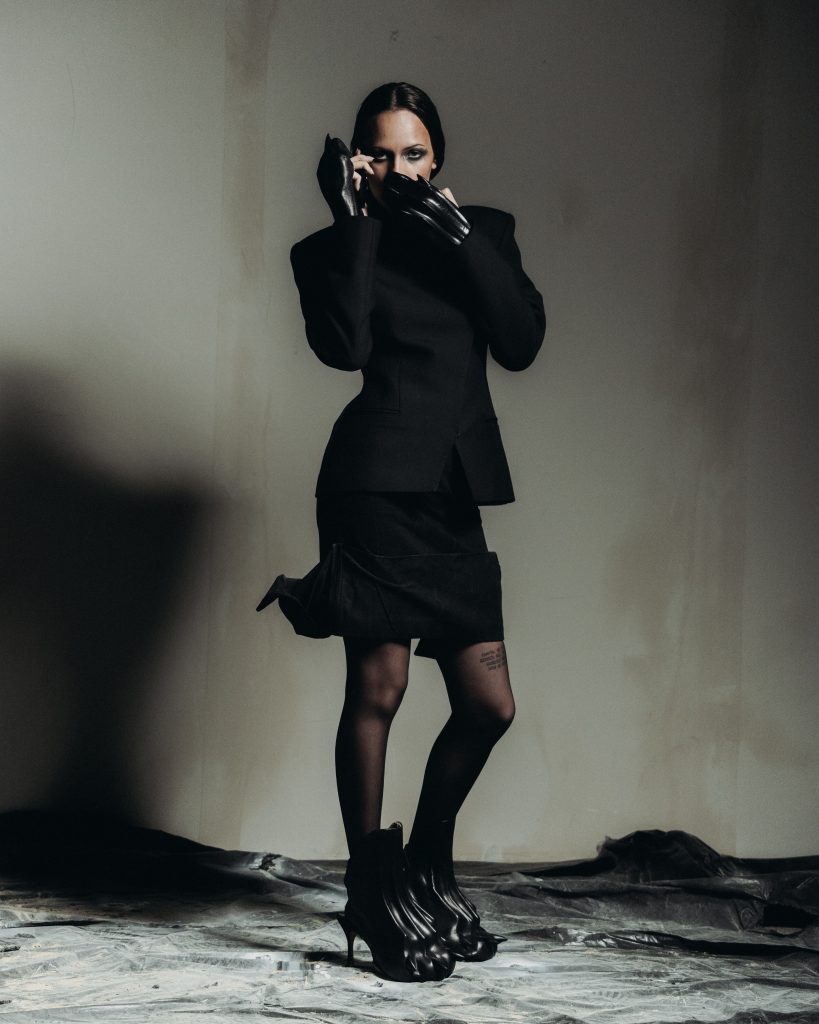
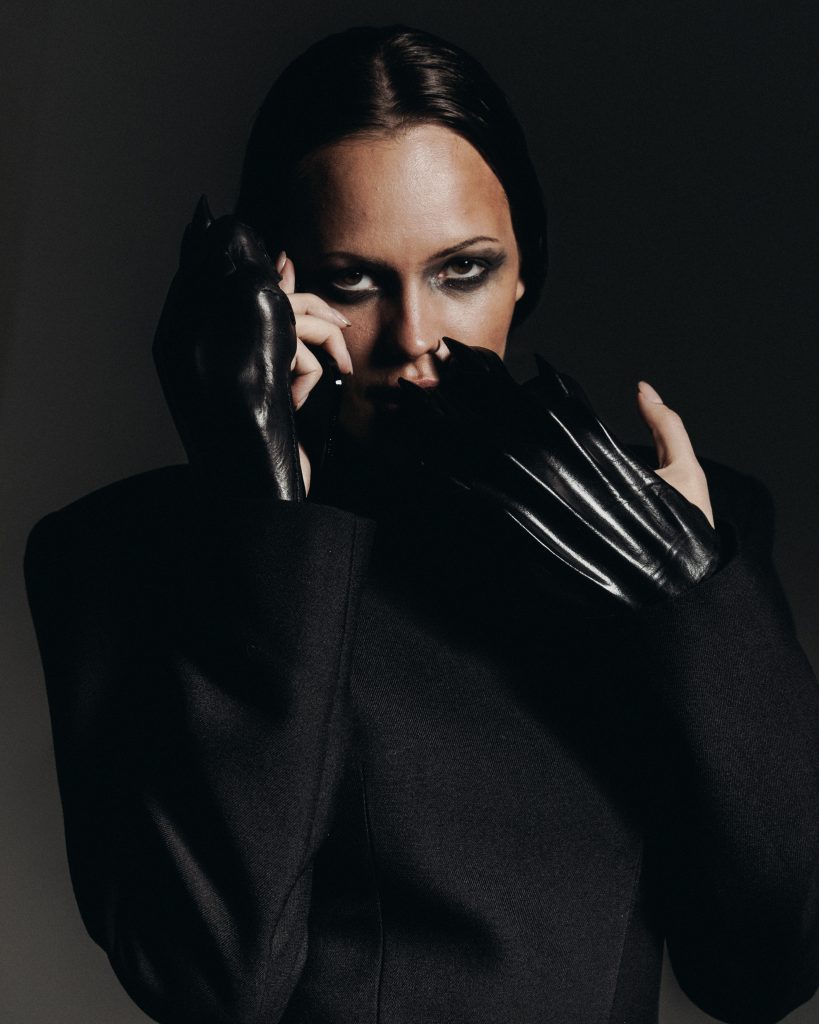
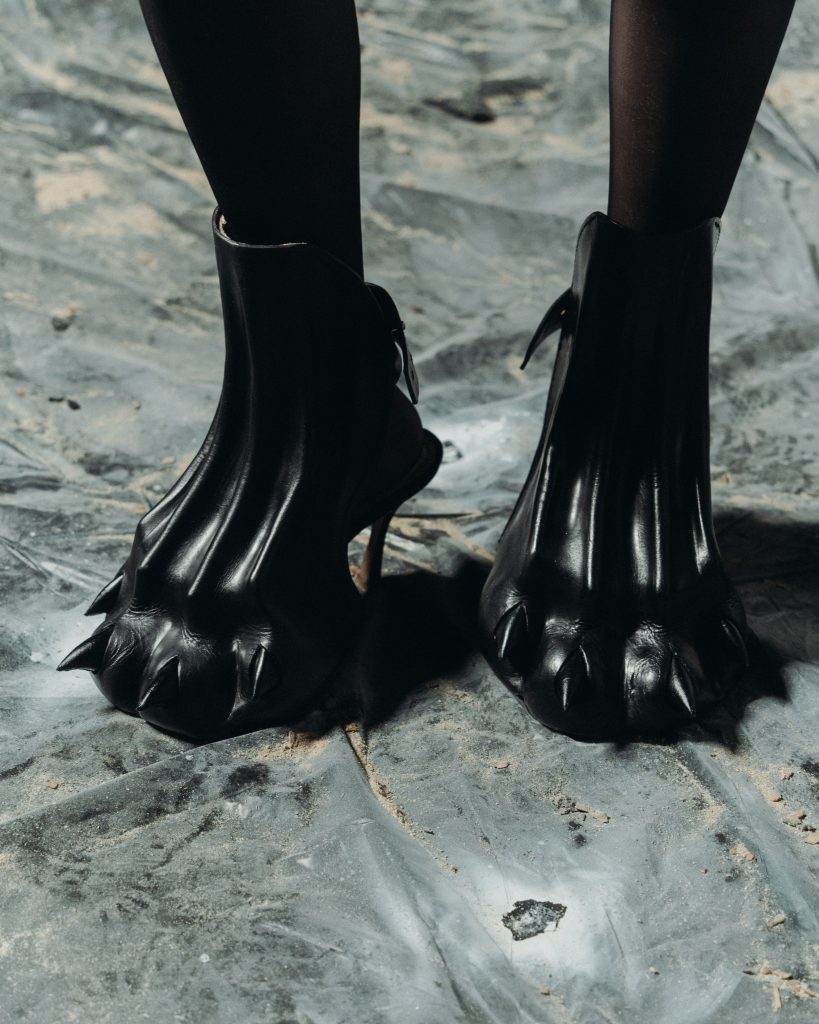
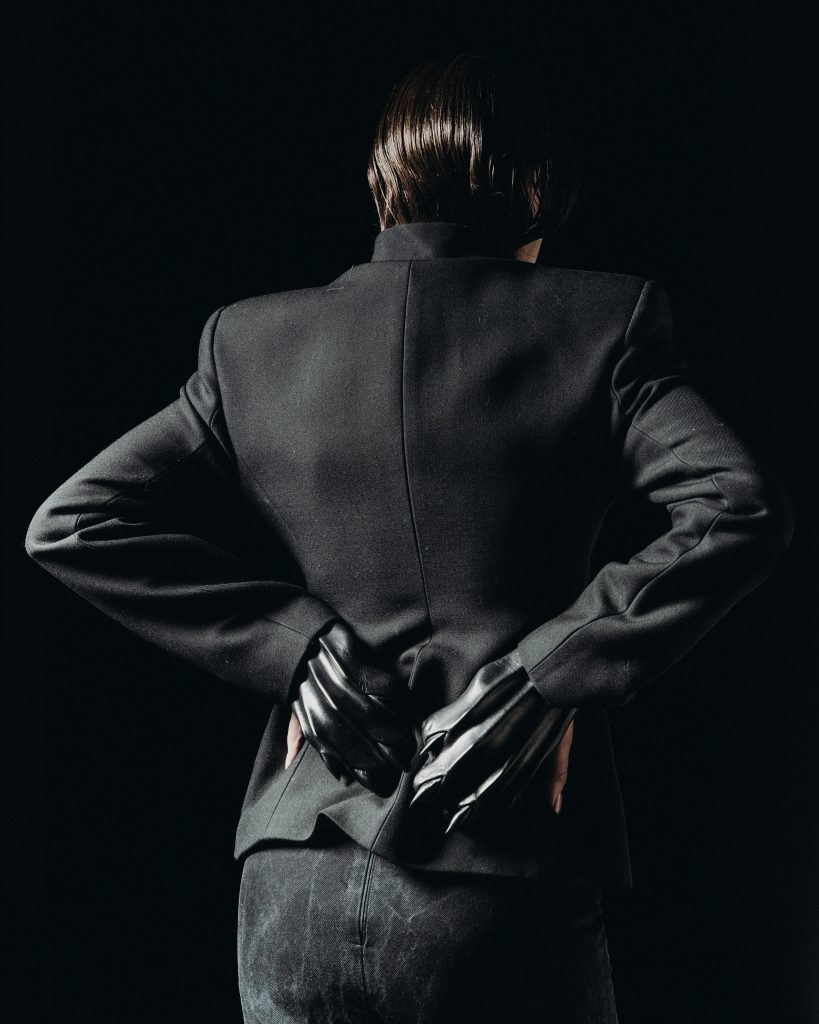
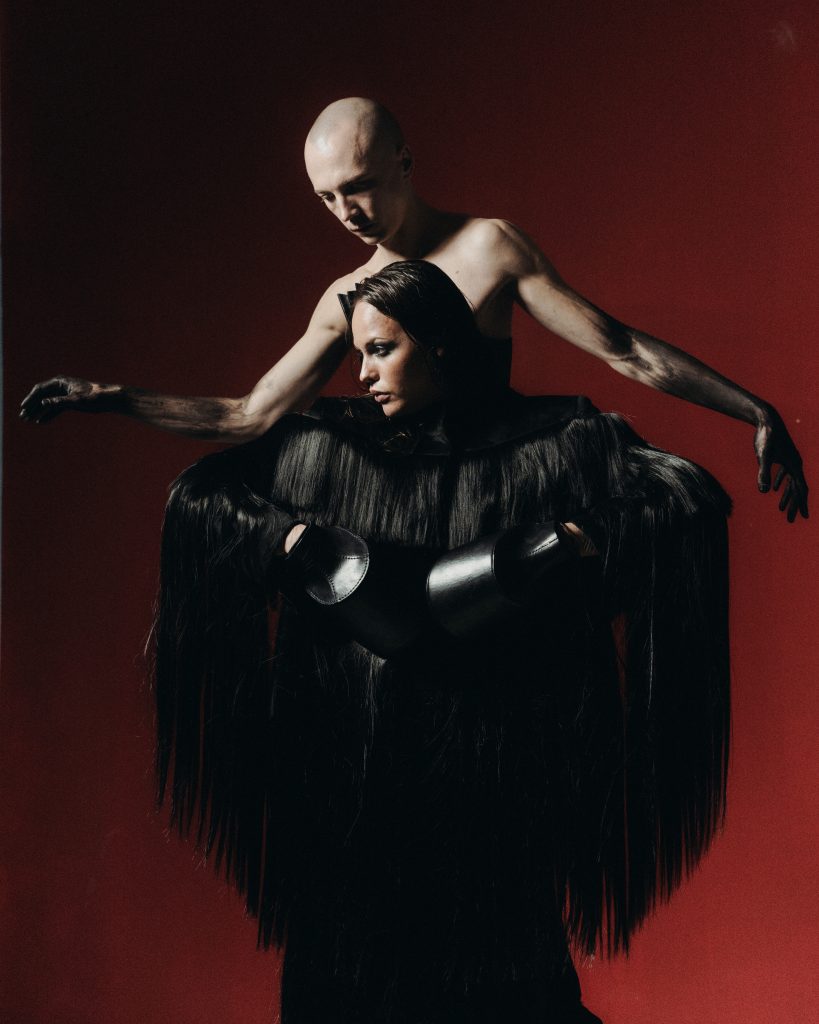
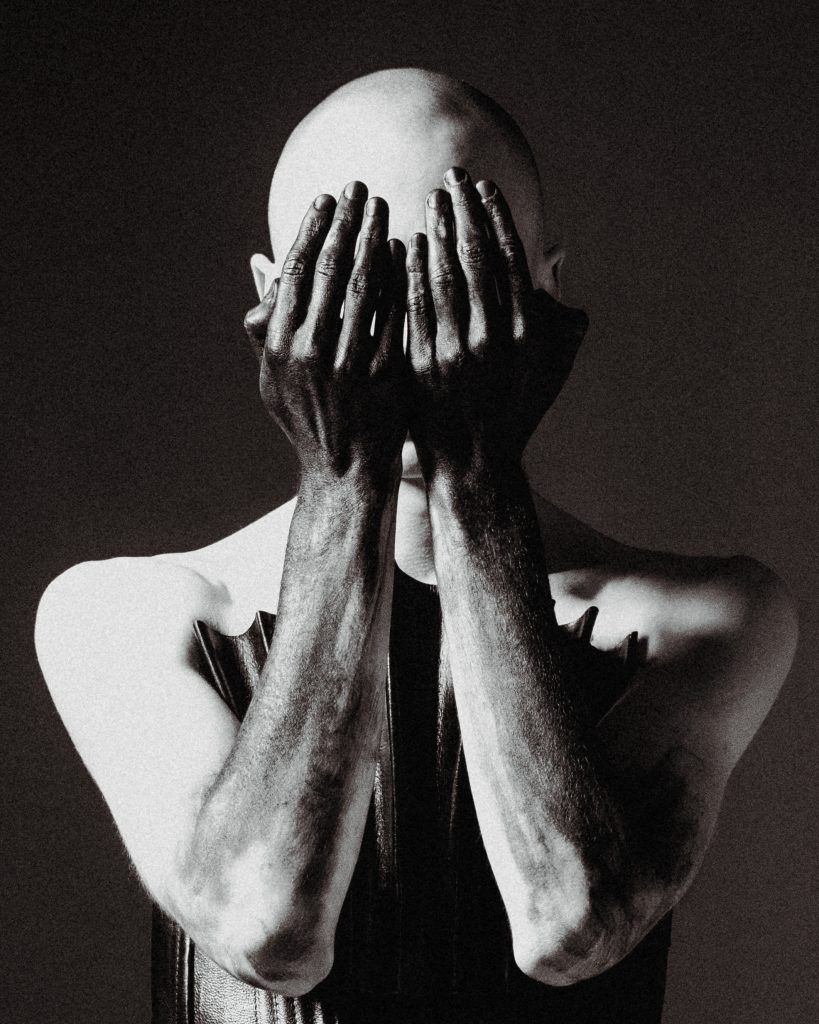
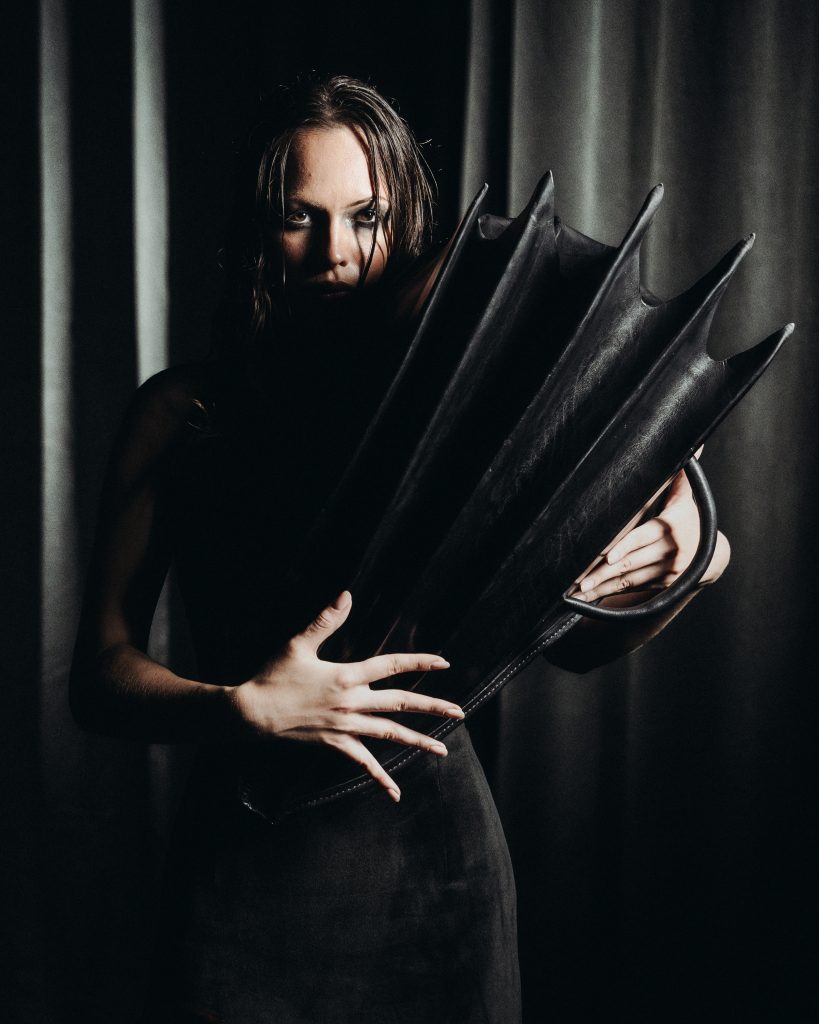
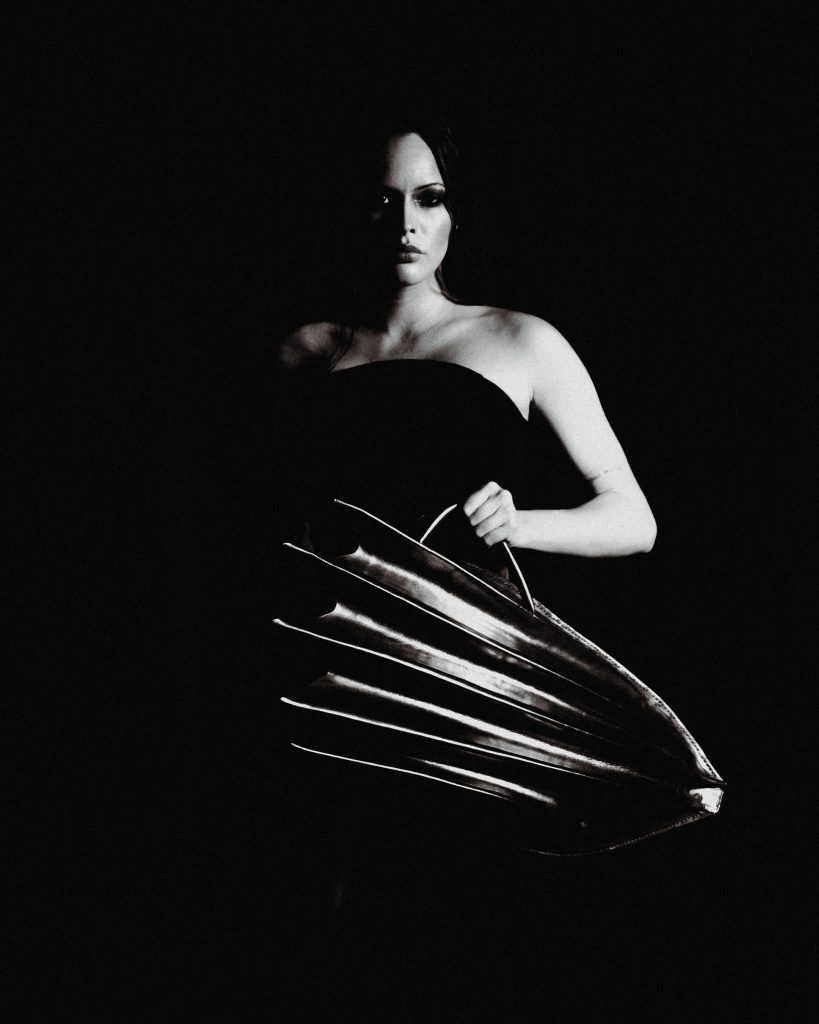
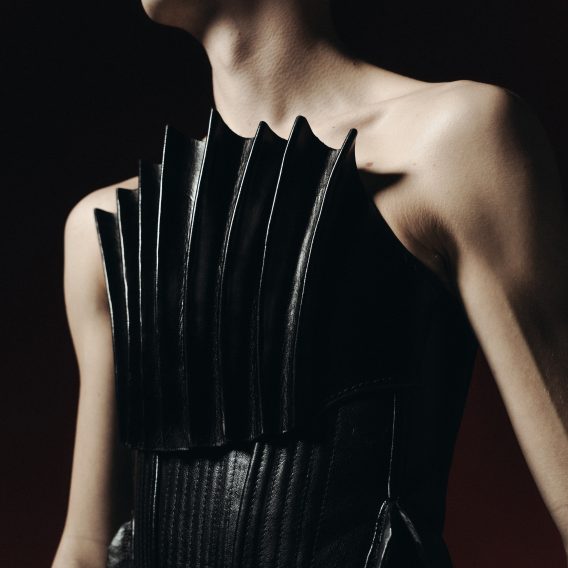
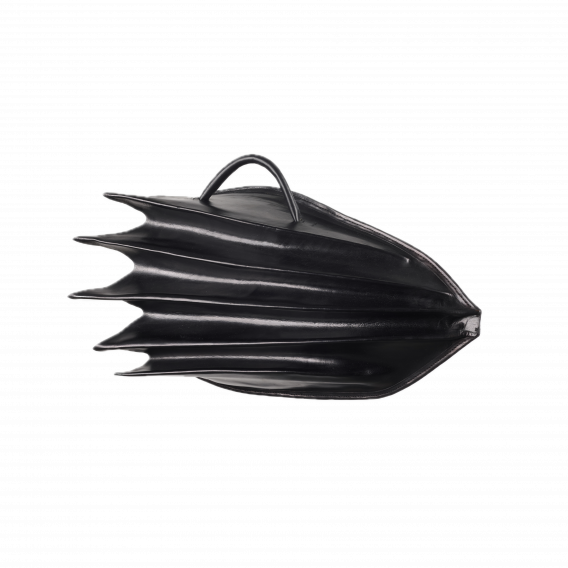
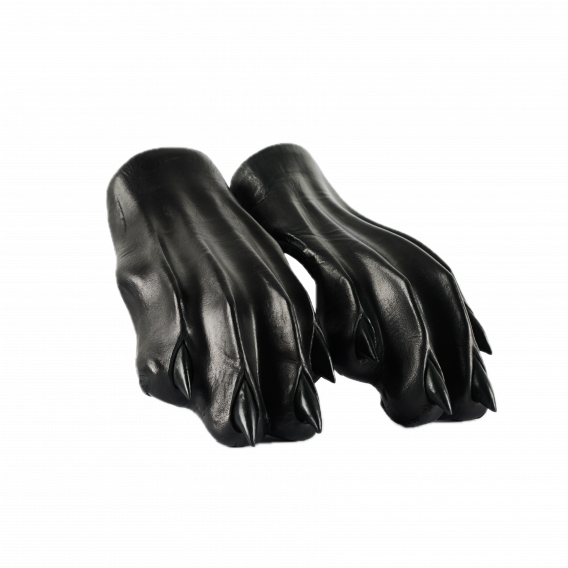
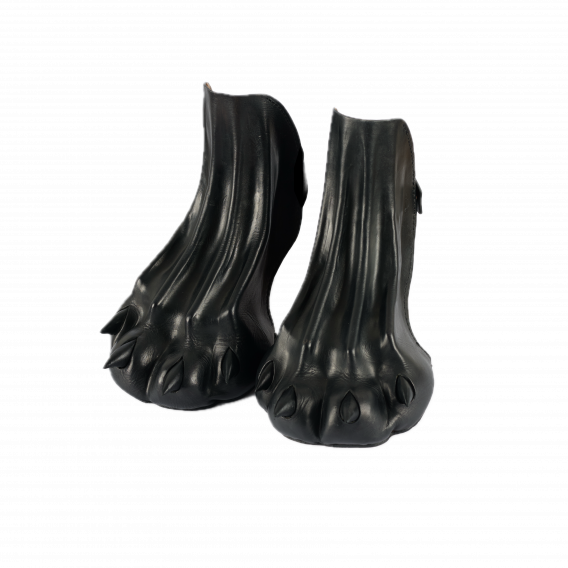
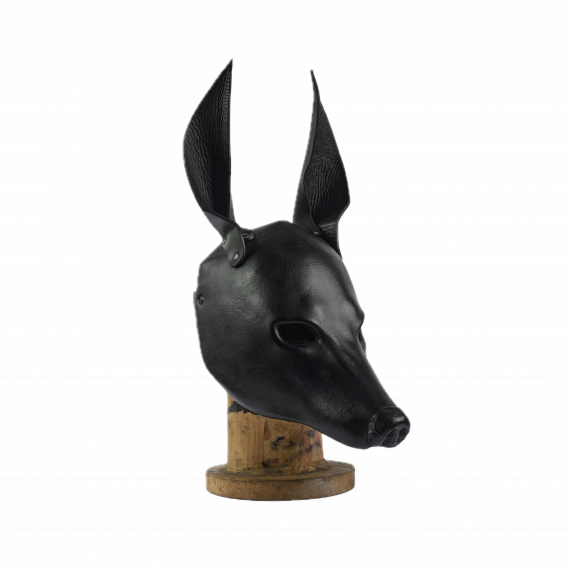
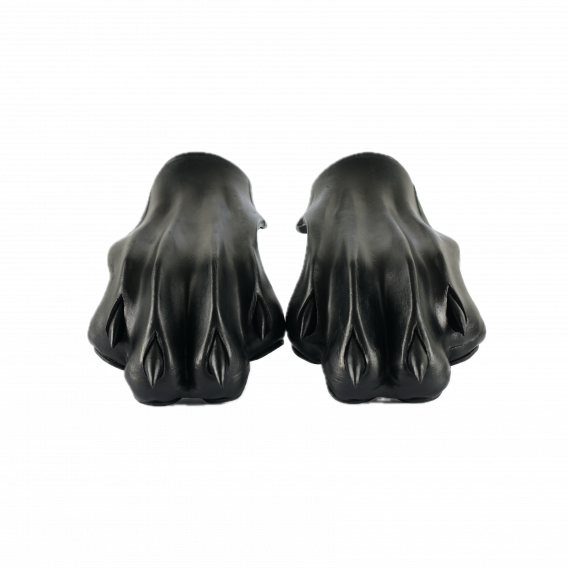
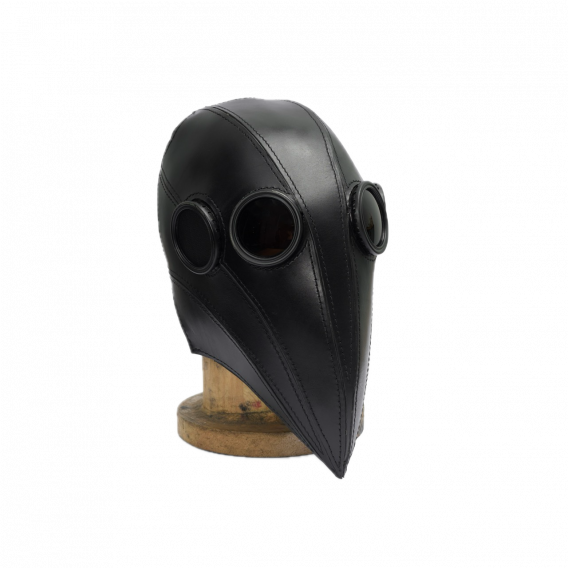
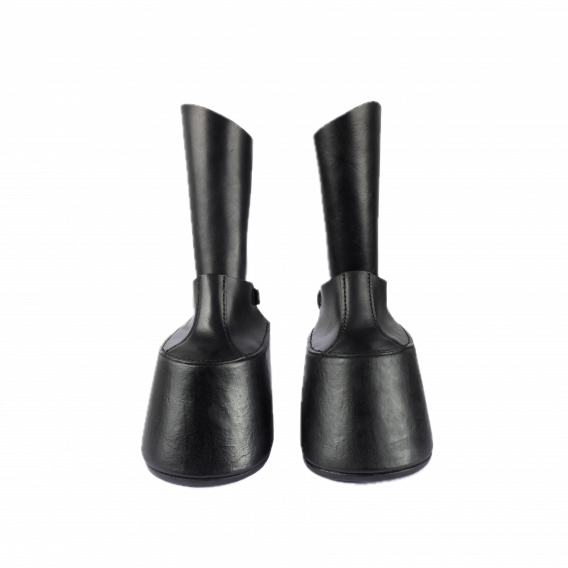
All three of MUTABOR`s looks are built around iconic Bob Basset masks. The team developed new hand and foot accessories, along with aesthetically driven garments that extend the mask's anatomy across the entire body - nine items in total coming together to create the full image of Bob Basset’s vision.
“I reviewed the archive from the brand’s inception to the present – photographs, articles, everything we had. I found the famous ‘lapotufli’ [paw-slippers] and wondered: why haven’t we taken this further? When you join a brand, you examine its archives, take the best patterns, templates, and images, and reinterpret them. It makes no sense to simply repeat well-known Bob Basset works, instead, we must create a strong product within their context — that is what I believe in,” says Arina Petrova.
Dog / Anubis. This look is based on the archival Anubis mask and reimagined Dog Paws from 2009 launch. These leather “paw-slippers” became one of the pieces that launched Bob Basset’s international fashion story, famously featured in The New York Times’ T Magazine in 2009. The original construction was too complex to reproduce, so despite enormous demand, the prototype remained a one-off for 17 years. Modern technologies gave the team a capability to revisit the concept, modify the construction to scale across different sizes, and make the new version suitable for mass production. In 2026, this image evolves for the first time from a separate mask and paws into a complete creature-look.
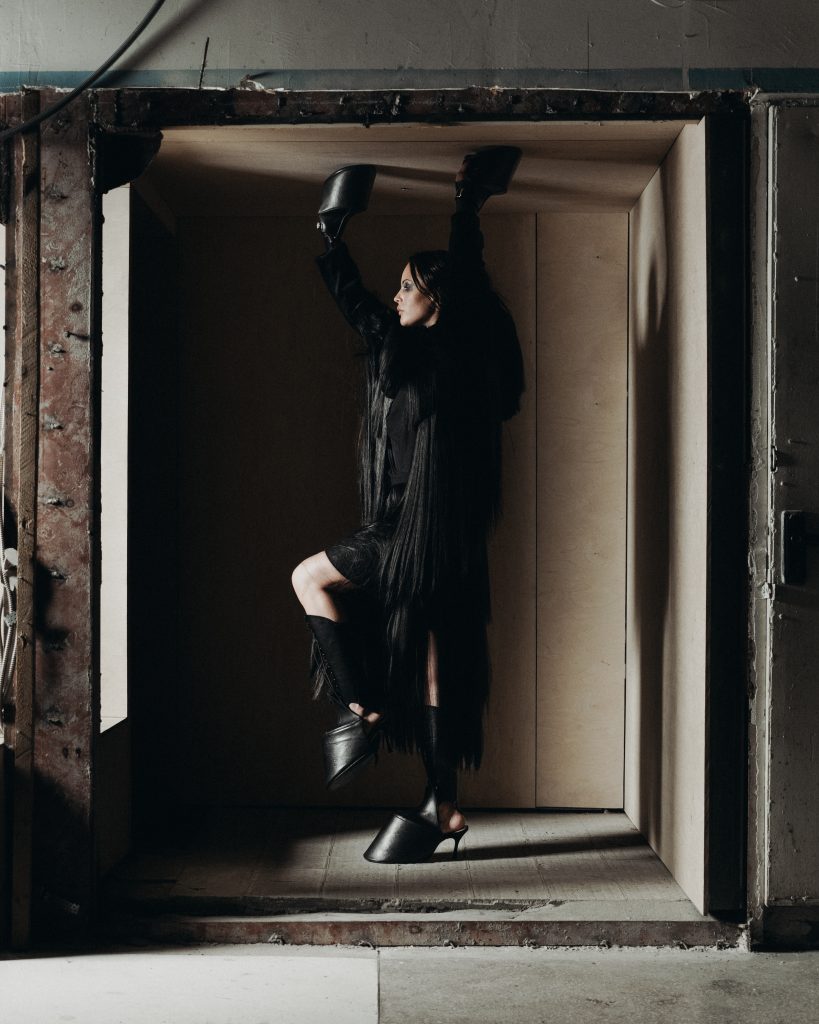
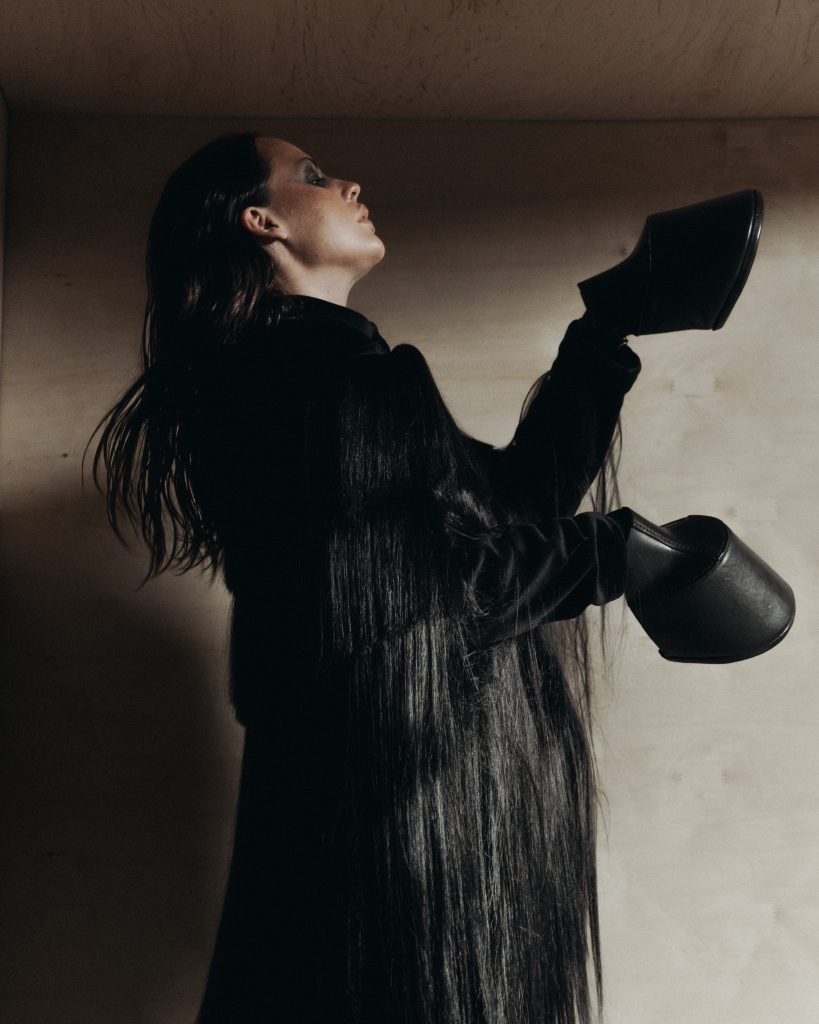
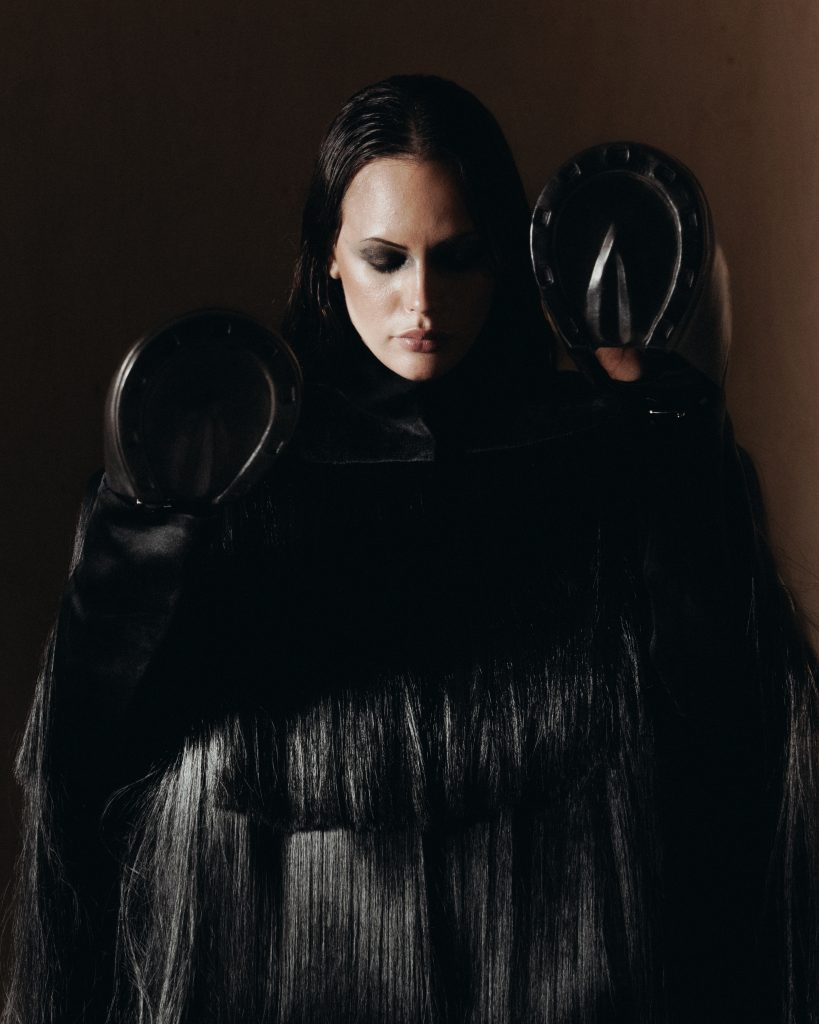
Horse. The central element of the second look is the Pony Mask, created by Bob Basset in 2011. Over the years, the studio has produced approximately 500 units for clients worldwide, making it one of the most recognizable images in its history. Arina Petrova has now developed it into a full costume-concept for the first time in the existence of the studio. New hoof constructions for hands- and feet-accesorizes, along with other elements, extend the horse’s form onto the human body. Some constructions are designed to adapt to different sizes without requiring individual customization for consumer measurements.
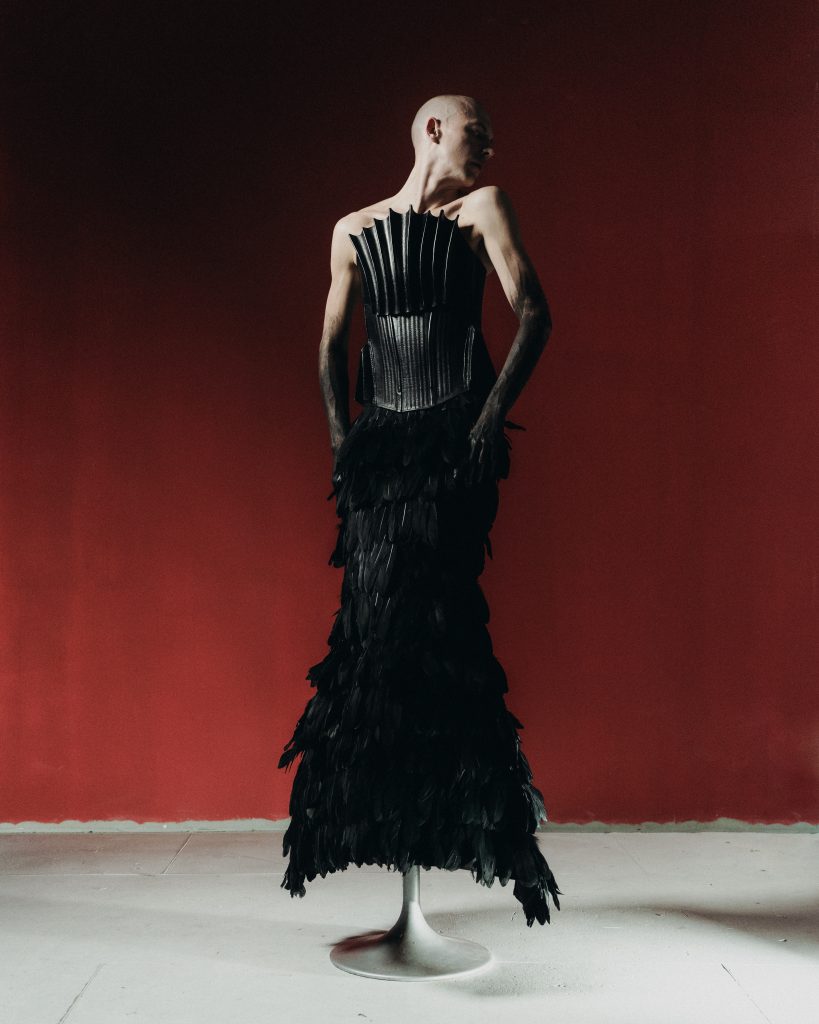
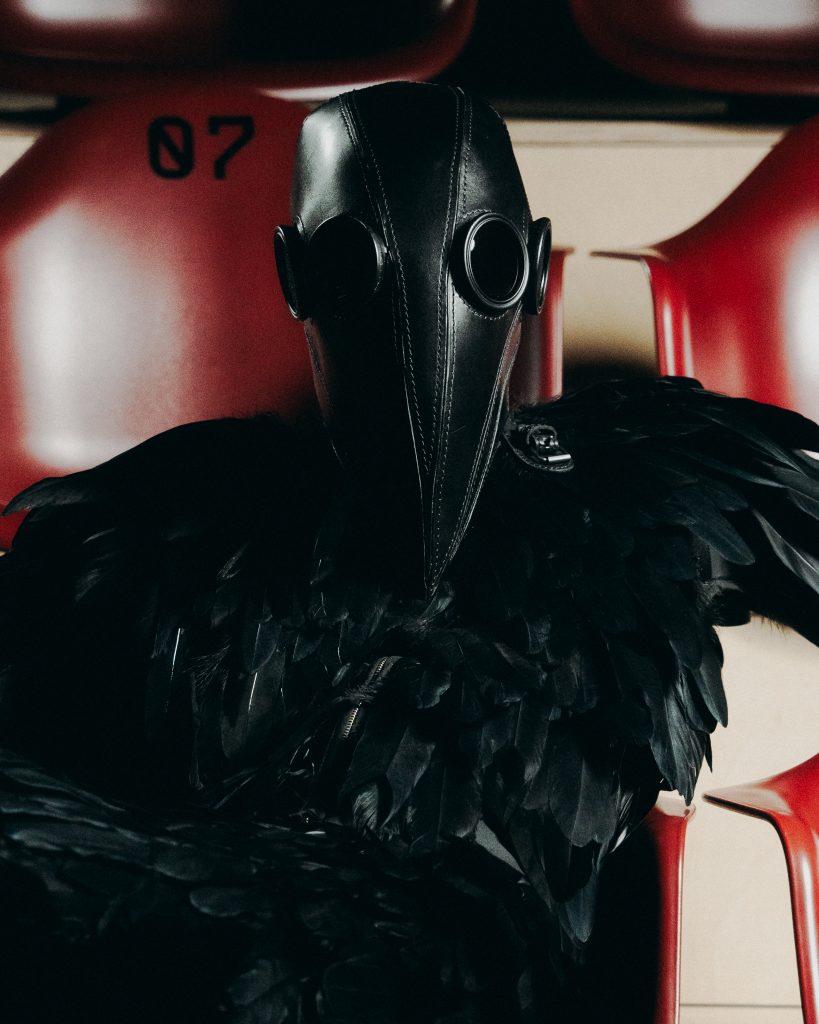
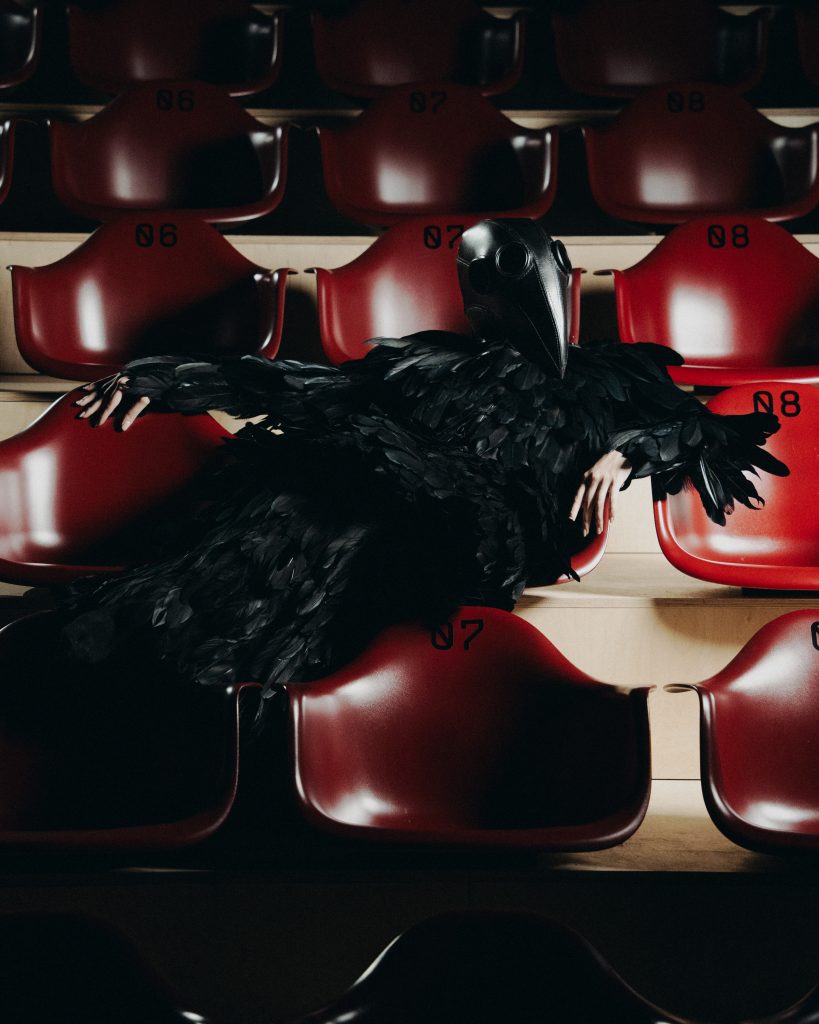
Bird / Plague Doctor. The third look evolved from the Plague Doctor mask, created by Bob Basset in 2015 and presented at UFW in the ΣΑΛΩΜΗΣ collection. In the MUTABOR collection, it takes on a new meaning: the characteristic elongated beak no longer reads literally as a historical plague doctor image but instead becomes the head of a bird. New claw constructions and a jacket with over 350 elements were created for it, with plasticity that also nodding to dragon imagery from Bob Basset’s history. Unlike most pieces in the MUTABOR collection,which are designed for reproducibility, this jacket remains a couture object, handcrafted as a unique piece by Arina Petrova.
“The most important aspect of collaborating with Arina is that I see results that match the Bob Basset level. She not only maintains this standard but also drives the brand forward with her decisions,” says Serhiy Petrov.